Supercharge worksite productivity with Sitemetric AI.
Learn more
SIDA badging is the airport-run process that gives a worker unescorted access to the Security Identification Display Area, the secured part of an airport where badges have to be displayed. For construction crews it typically involves a fingerprint-based criminal history check, a security threat assessment, airport security training and a badge that is valid for the length of the contract.
A SIDA badge is an identification badge, issued by an airport operator, that authorizes unescorted access to the airport's Security Identification Display Area. SIDA is a TSA term. Under 49 CFR Part 1542, commercial airports define secured areas, including the SIDA and the air operations area (AOA), and control who can enter them.
Badge types vary by airport. Some airports issue a distinct construction badge, and the areas a badge opens depend on what the worker's job requires.
A SIDA badge and a construction site badge serve different purposes. The SIDA badge comes from the airport and governs access to the airport's secured areas. A jobsite badge comes from the construction project and governs entry to the work area, along with attendance by company and trade. Many airport projects use both.
1. Company sponsorship. An authorized signatory for the contractor sponsors each applicant. Airports typically require signatories to complete their own training first.
2. Background checks. Applicants for unescorted SIDA access complete a fingerprint-based criminal history records check (CHRC) under 49 CFR 1542.209, along with a security threat assessment (STA).
3. Security training. The airport trains applicants on its security rules, including badge display, escort procedures and how to challenge someone without a badge. Many contractors schedule it alongside jobsite orientation.
4. Issuance. The airport badge office issues the badge, often valid only for the duration of the construction contract.
5. Ongoing obligations. The worker displays the badge in the SIDA and reports a lost or stolen badge right away so the airport can deactivate it.
Because checks and training come before issuance, many contractors start badging before mobilization and build the lead time into the schedule.
Escorting lets a person without a SIDA badge enter a restricted area under the supervision of a badge holder. Federal rules leave it to each airport whether to allow escorts, so the specifics come from the airport's security program.
Common escort rules include the following: the escort holds a badge with escort privileges, stays within sight and sound of the people they escort, maintains a continuous escort and supervises only a manageable number of people at once. At some airports, escorted workers wear an indicator showing they require an escort, and some airports bar escorting someone whose own badge is lost, stolen or suspended.
On a construction project, escorting has a cost in labor. An escort is a skilled worker taken away from their own task, so planning escort coverage for new hires and short-term trades keeps it from slowing the work. Some contractors bring in dedicated escort personnel for this, so their own crews stay on task.
Airports have to account for the badges they issue. Under 49 CFR 1542.211, an airport retrieves expired badges and badges of people who no longer need access, records lost and stolen badges and audits the system at least once a year. If too many badges are unaccounted for, the airport has to revalidate or reissue them. The TSA threshold is generally 5 percent.
For contractors, an unreturned badge typically means a fee set by the airport and a slower closeout. Collecting badges as each crew demobilizes, rather than all at the end, keeps the count manageable.
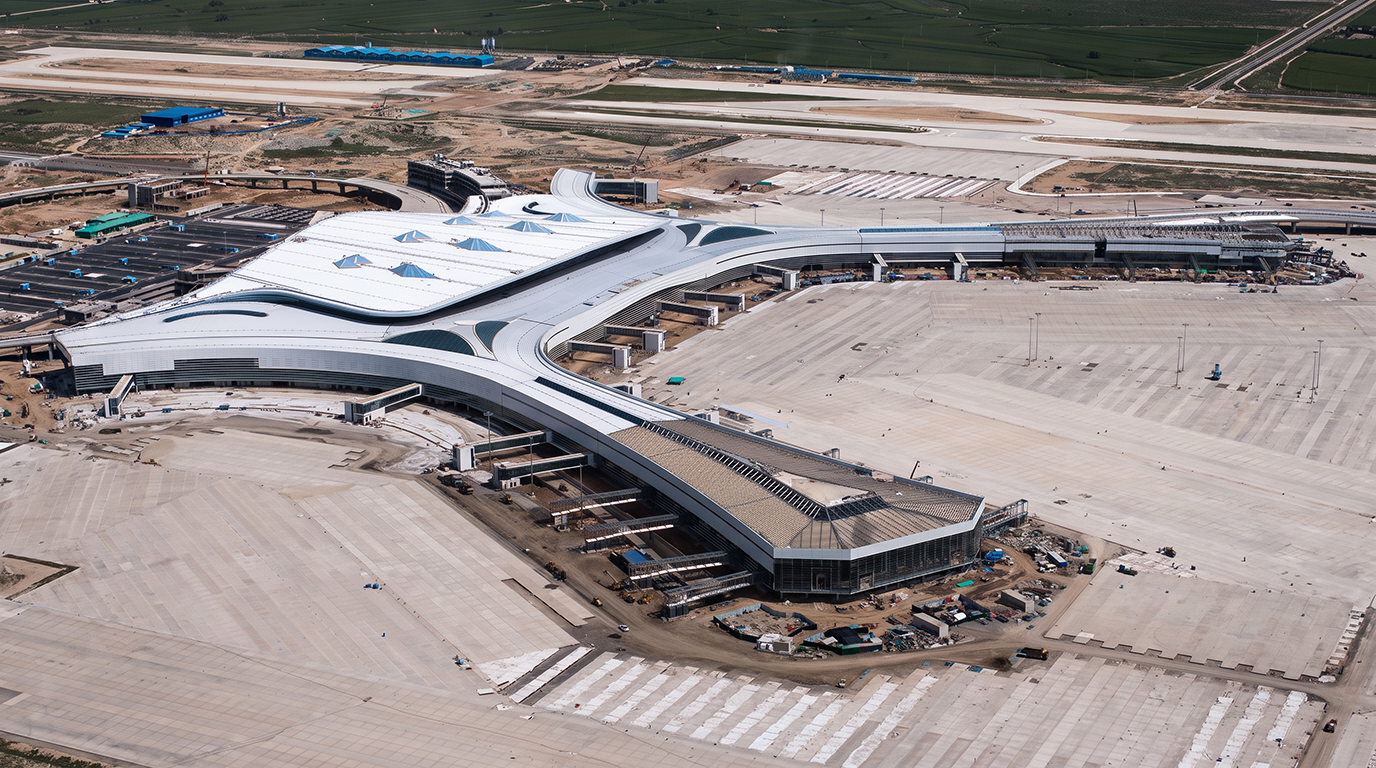
Airport construction is mission critical work. The airport cannot close for the project, so terminal programs run in phases inside an operating facility, and a gap in security can affect passengers and flight operations as well as the jobsite.
Badging controls who may enter. Cameras and security personnel cover what badging cannot. AI cameras typically monitor the perimeter, laydown areas and the edges of work zones that border secured areas, with alerts for unauthorized or after-hours activity. Security personnel trained for restricted areas verify credentials at entry points and respond in person when something is flagged. The construction site cameras guide covers camera types, power and connectivity.
Sitemetric has been on airport builds continuously since 2023, at every FAA airport tier from the busiest large hubs to regional terminals. One of the nation's largest general contractors has brought Sitemetric onto seven airport projects at four large hub airports. The airport issues the SIDA badge. Sitemetric manages the construction side: who is on the jobsite, which company they work for and where they are cleared to be.
SIDA stands for Security Identification Display Area. It is the part of an airport, defined in the airport's security program under TSA rules, where people have to display an airport-approved badge or be under escort.
The airport operator's badge office issues them. The contractor sponsors each applicant through an authorized signatory, and the applicant completes the background checks and training the airport requires.
It varies by airport. Processing time depends on the fingerprint-based background check, the security threat assessment and training availability. Starting the process before mobilization keeps crews from waiting on badges once work begins.
Only under escort, and only where the airport's security program allows escorting. The escort has to hold a badge with escort privileges and follow the airport's rules for supervision.
Each airport sets its own limit in its security program. The common requirement is that the escort can keep everyone in sight and in control at all times, which in practice keeps escorted groups small.
The worker reports it right away so the airport can deactivate it. Airports typically charge a replacement fee, and the lost badge stays on the airport's unaccounted-for list until it is resolved.
They go back to the airport badge office, usually as each worker or crew finishes rather than in one batch at the end. Unreturned badges can lead to fees for the contractor and count against the airport's annual badge audit.
No. They come from different issuers and answer different questions. The airport's SIDA badge decides who may be in its secured areas, while the project's badge shows who worked on the jobsite, for which company and for how long. Many airport projects use both.
Talk with our team about your jobsite needs and learn how Sitemetric can help your project succeed.