
Construction site theft prevention is the set of practices that reduces loss of equipment, materials, and tools from a jobsite. Effective programs combine controlling who enters, hardening what is worth taking, removing the conditions that make theft easy, and ensuring someone notices while it is happening.
Theft generally targets what moves easily and sells quickly.
Portable equipment. Generators, light towers, compactors, welders, and plate compactors. Valuable, transportable by one person with a trailer, and unremarkable in transit.
Copper and wire. Targeted because the resale market is immediate and asks no questions. Often taken destructively, so the damage exceeds the value of the material.
Tools. Individually small and collectively substantial. The most under-reported category, because losses often fall below the threshold at which anyone files.
Fuel. Easy to take, hard to trace, and rarely secured to the same standard as equipment.
Materials and fixtures. Pipe, fittings, lumber, and appliances, particularly during fit-out when finished goods arrive onsite.
Understanding what is actually at risk on your project matters, because a program built around heavy equipment does not protect the fit-out phase when the exposure shifts to appliances and copper.
Losses concentrate when nobody is onsite. Nights, weekends, and long holiday periods when a jobsite sits empty for several consecutive days are the pattern contractors report consistently.
The practical consequence is that coverage should follow exposure rather than the workday. A project that can afford coverage for part of the week generally gets more return by covering the empty part.
Phase matters, too. Early phases hold equipment and fuel. Structure holds materials in bulk. Fit-out holds finished goods, appliances, and copper, and it is also when more people have legitimate access to the building interior.
The measure most often left out of a construction site theft conversation is access control, because it is usually filed under workforce management.
Not every loss comes over the fence. Knowing who is onsite, when, and whether they were cleared to be there is what turns an unexplained loss into an investigable one. A credentialed entry record narrows the question from "who could have been here" to a list.
Three specific practices matter. Documented visitor and delivery access, so people who are not workers are recorded rather than waved through. Prompt credential revocation, so a worker removed from the project loses access immediately rather than at the end of the week. And badge and no-badge visibility, which flags a person onsite with no associated badge event, catching exactly the case a perimeter cannot.
.jpg)
Consolidate storage. Scattered material is harder to watch than material in one secured area. A single laydown yard with controlled access beats five convenient piles.
Secure fuel separately. Fuel is taken frequently and secured rarely.
Immobilize equipment. Removing keys is not immobilization. Wheel locks, hydraulic locks, and battery disconnects raise the effort meaningfully.
Park defensively. Positioning large equipment to block access to smaller equipment costs nothing.
Light the areas that matter. Lighting removes cover and improves camera performance, and its absence is an invitation. Laydown yards and equipment storage are more important to light than the office trailer.
Register and mark assets. Serial numbers, photographs, and marking improve recovery odds and support claims. This is a recovery measure rather than a prevention measure, but it costs little.
Control the perimeter's weak points. Temporary fencing is only as effective as the gaps nobody has walked recently. Walking the line on a schedule can identify gaps that a site plan does not show.
A measure that records a theft has not prevented one.
The distinction that matters is whether anyone is watching in real time. Recorded footage supports a claim and an investigation. Monitored footage produces a response while the event is in progress. Both are legitimate solutions and they answer different questions.
For prevention specifically, three things matter. Classification rather than motion detection, since a system reporting every branch movement produces alerts with no value. Review before escalation, so the site team is contacted for real events. And someone able to respond, whether onsite personnel or a documented escalation to emergency services.
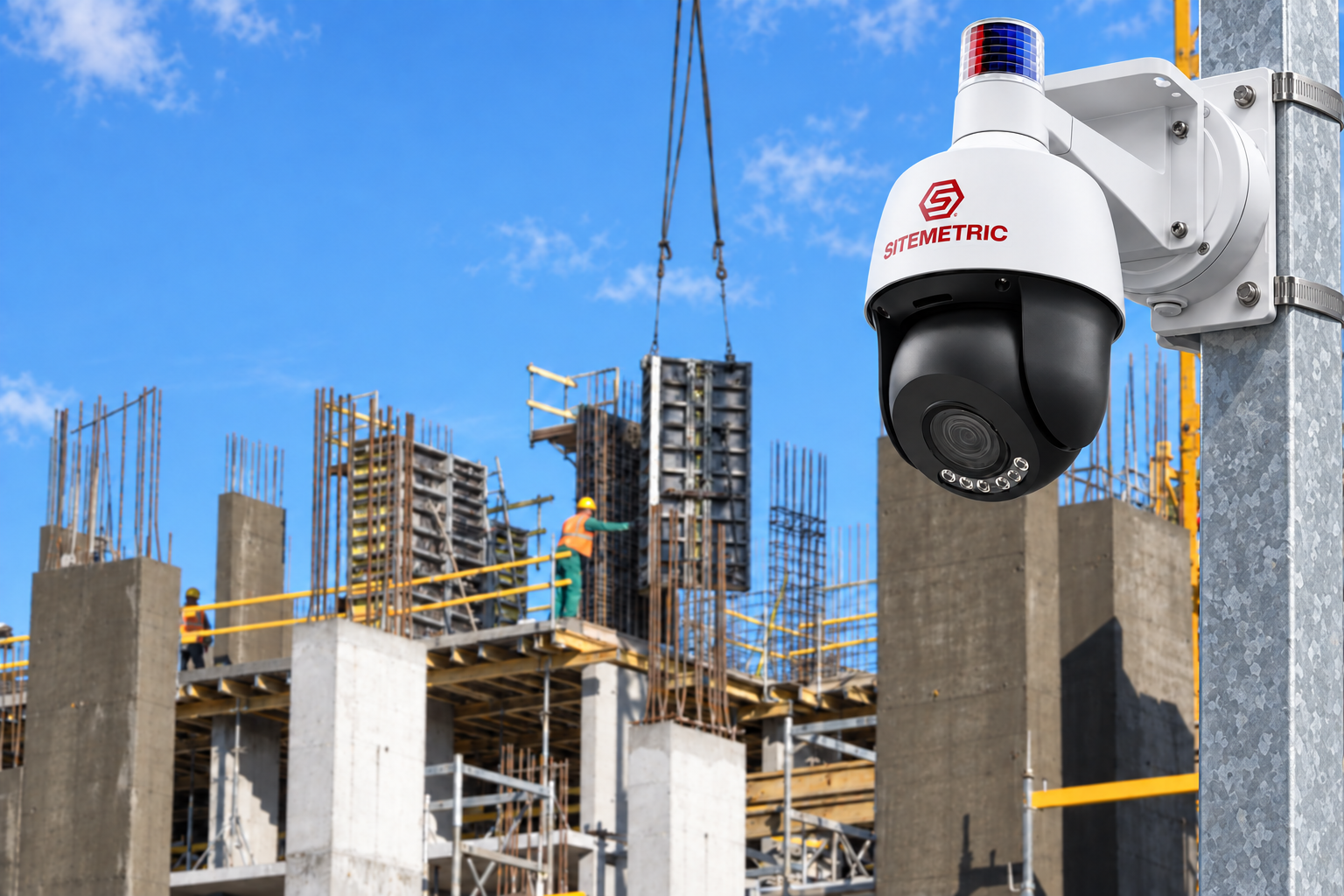
Active deterrence, meaning light and audio at the camera, can interrupt events rather than recording them, which is worth considering at high-exposure positions.
Start from what is actually exposed. A downtown site with a locked perimeter and a remote solar project with miles of fence face different problems.
Follow the phase. The exposure changes as the project moves, and a program set at mobilization typically is protecting the wrong things by fit-out.
Cover the hours when losses happen. Weekday coverage on a site losing material over long weekends is coverage in the wrong place.
Ask what happens in the first five minutes after something is detected.
Document everything. The record matters for insurance, and the absence of documentation can become a serious problem.
Sitemetric combines controlled access, AI cameras, monitoring, and onsite personnel on one platform, so an entry record and a camera event are part of the same picture. Alerts route to JSOC (Joint Security & Operations Center), Sitemetric's 24/7 U.S.-based monitoring center.
Portable equipment such as generators, light towers, and compactors, along with copper wire, tools, fuel, and during fit-out, materials and appliances. Copper is targeted because resale is immediate. Tools are the most under-reported category, since individual losses often fall below the threshold at which anyone typically files a claim.
Overwhelmingly during the unattended hours: nights, weekends, and long holiday periods when a jobsite sits empty for several consecutive days. Coverage that follows the workday misses the window when theft typically occurs.
It does both, and the theft function is often overlooked. Not every loss comes over the fence. A credentialed entry record, documented visitor and delivery access, and immediate revocation when someone leaves the project turn an unexplained loss into an investigable one.
It depends on where the exposure is. On a high-headcount project, controlling and documenting who enters generally does the most good. On a low-headcount site holding portable equipment, hardening storage and covering the unattended hours matters more. Both benefit from lighting, which is inexpensive relative to its effect.
No. Heavy equipment lacks titles and consistent identification numbering, so a stolen machine is harder to trace than a stolen vehicle. Registering equipment and keeping serial-number records improves the odds and supports a claim, but recovery is a poor substitute for prevention, and the schedule impact lands whether or not the asset comes back.
It depends on whether anyone is watching. Recorded footage produces evidence after someone discovers a problem. Monitored footage produces a response while the event is happening. Active deterrence cameras, which add light and audio at the camera, interrupt events directly. Ask a provider what specifically happens in the first five minutes after a detection.
This is the normal starting condition rather than an exception. Solar-powered camera platforms with satellite or cellular connectivity operate independently of site infrastructure, and access control that makes decisions on the device keeps working through connectivity loss. Ask any vendor what happens when both are unavailable.
It should follow the exposure. Early phases hold equipment and fuel outdoors. Structure holds bulk materials. Fit-out holds appliances, fixtures, and copper, and more people have legitimate interior access.
Talk with our team about your jobsite needs and learn how Sitemetric can help your project succeed.

