Supercharge worksite productivity with Sitemetric AI.
Learn more
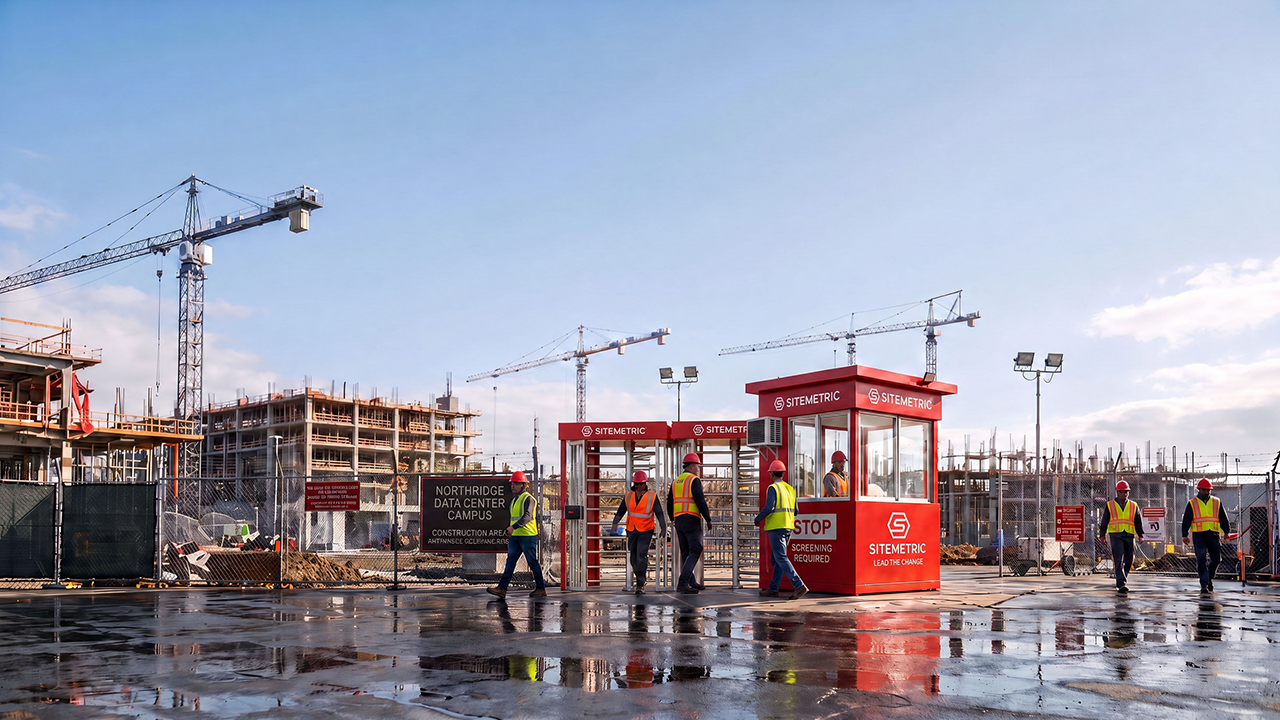
Construction site security is the combination of physical barriers, controlled entry, camera coverage, monitoring, and onsite personnel that protects a jobsite from theft, vandalism, trespassing, and unauthorized access. Most projects use several layers together, since no single measure covers an active jobsite that changes shape every month.
Construction site security is the practice of protecting a jobsite, the assets on it, and the people working there. It covers theft of equipment, tools, and materials, vandalism, trespassing, arson, and unauthorized access, and on most projects it overlaps with safety and compliance rather than sitting apart from them.
Securing a construction site differs from securing a finished building because the jobsite is never the same twice. The perimeter moves, the entrances change, the population turns over constantly, and for most of the project there are no locking doors, no permanent power, and no network. A security program that assumes a fixed building does not survive contact with an active jobsite.
Losses on a jobsite fall into three categories, and each behaves differently.
Equipment. Heavy machinery is the headline, but portable equipment moves more easily. Generators, light towers, compactors, and welders are valuable and unremarkable on a trailer at two in the morning.
Materials. Copper wiring is commonly targeted because it has an immediate resale market that does not ask questions. Pipe, fittings, lumber, and appliances follow.
Tools. Individually small, collectively significant, and often unreported because the loss falls below a deductible.
Recovery is unlikely. Heavy equipment lacks titles and consistent identification numbering, which makes a stolen machine harder to trace than a stolen vehicle.
The schedule pays more than the ledger does. Replacement cost is the visible number. Idle crews, rental equipment at short notice, a delayed inspection, and a missed milestone usually cost more, and they land on the project rather than the insurer.
Premiums follow claims. Filing has a cost of its own, which is why many contractors absorb smaller losses. It also means the reported scale of construction theft understates the real one, and reliable national data is hard to come by.
Vandalism carries no resale value and costs anyway. Cut wiring, damaged finishes, graffiti, and tampering produce rework with none of the offsetting recovery that theft occasionally allows.
The unattended hours. Contractors commonly report losses during quiet periods, particularly nights, weekends, and long holidays when a jobsite sits empty for three or four consecutive days. A project able to cover only part of the week generally gets more from covering that part.
The perimeter. Temporary fencing deters casual entry without stopping determined entry. It moves as the project moves and it is only as effective as the gaps nobody has walked recently.
The gate. An entrance anyone can walk through provides no control. It is also the vulnerability most often filed under workforce management rather than security.
Laydown yards and material storage. Often outside the main work area, often less lit, often less watched, and holding exactly the copper and material that gets taken.
Fuel and small equipment. Generators, light towers, compactors, and hand tools are portable, valuable, and easy to move without attracting attention.
The people already inside. Not every loss comes over the fence. Knowing who is onsite, when, and whether they were cleared to be there is what separates an investigable incident from an unexplained one.
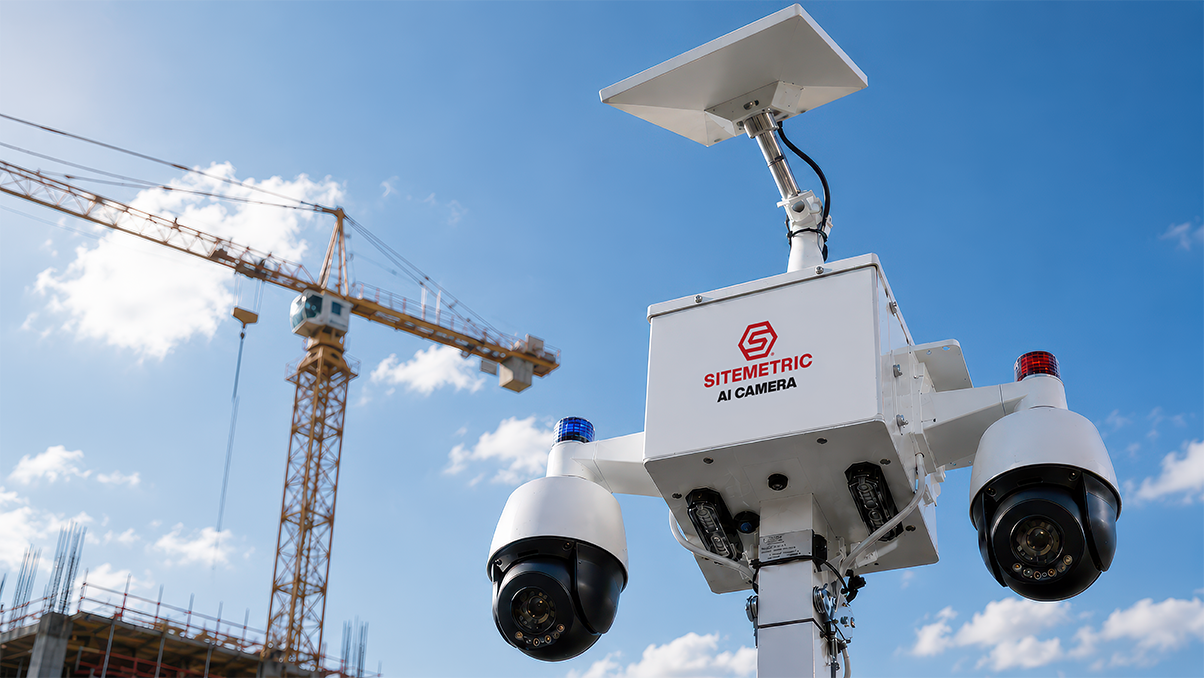
No single measure secures a jobsite. These layers each cover a different failure mode, and most projects run several.
Start with what you are actually protecting against. A downtown high-rise with a locked perimeter and a data center campus with a thousand badged workers and export-controlled areas present different security problems.
Weigh headcount against assets. On a jobsite with thousands of workers, controlling and documenting who comes through the gate usually returns the most. On a low-headcount jobsite holding high-value equipment, perimeter and after-hours coverage matter more.
Cover the hours that are actually exposed. Losses concentrated on long weekends make weekday coverage the wrong place to concentrate.
Ask what happens after detection. A camera that records a theft and an alert that produces a response in minutes are different products entirely.
Ask how the records reconcile. When camera, access control, and onsite coverage come from different providers, each keeps its own log in its own format. Reconstructing a single timeline during an incident review means pulling three exports and matching timestamps by hand, usually while someone is waiting on an answer.
Check what the owner requires. On mission-critical projects, credentialed access and documented site security are frequently contract requirements rather than optional additions.
Sitemetric brings access control, AI cameras, monitoring, and onsite personnel together on one platform, so a badge event and a camera event are part of the same record instead of two systems nobody reconciles. Alerts route to JSOC (Joint Security & Operations Center), the company 24/7 U.S.-based monitoring center. More than 1.5 million workers across 40 states are on the Sitemetric platform, including 90% of the top 20 ENR contractors.
Portable equipment, materials, and tools. Generators, light towers, compactors, and welders move easily, which is what makes them attractive. Copper wiring is commonly targeted because it has an immediate resale market that does not ask questions. Tools are the category most likely to go unreported, because the loss often falls below the deductible.
During the unattended hours. Contractors commonly report losses on nights, weekends, and long holiday periods when a jobsite sits empty for several consecutive days. Where coverage has to be prioritized, the window when nobody is there is generally where it does the most.
There is no single one, which is why programs are layered. That said, the layer most often underrated is access control. On a project with thousands of workers cycling through, knowing and documenting who came through the gate does more for jobsite security than most perimeter measures, and it produces a record that stays useful long after the incident.
It depends on what happens after something is detected. Cameras that only record provide evidence after the fact. Cameras that are actively monitored produce a response while the incident is happening. Onsite personnel handle the situations software cannot: visitors, deliveries, exceptions at the gate, and a visible presence at the entrance. Most projects of any scale end up with a combination, and the question worth asking a vendor is what specifically happens in the first five minutes after an alert.
This is the normal starting condition on most projects rather than an edge case. Solar-powered camera platforms with satellite or cellular connectivity operate independently of jobsite infrastructure, and access control equipment that makes decisions on the device rather than in the cloud keeps working through connectivity loss. Ask any vendor directly what happens when both power and network are unavailable.
Increasingly, yes. On mission-critical projects such as data centers, government work, healthcare, and semiconductor facilities, owners frequently write credentialed access and documented site security into the contract. Insurers also look at what controls are in place, and the documentation a security program produces matters when a claim is filed.
Usually not. Heavy equipment lacks titles and consistent identification numbering, so a stolen machine is much harder to trace than a stolen vehicle. Registering equipment and keeping detailed serial-number records improves the odds, but recovery is a poor substitute for prevention, and the schedule impact of a theft lands whether or not the asset comes back.
Talk with our team about your jobsite needs and learn how Sitemetric can help your project succeed.

