
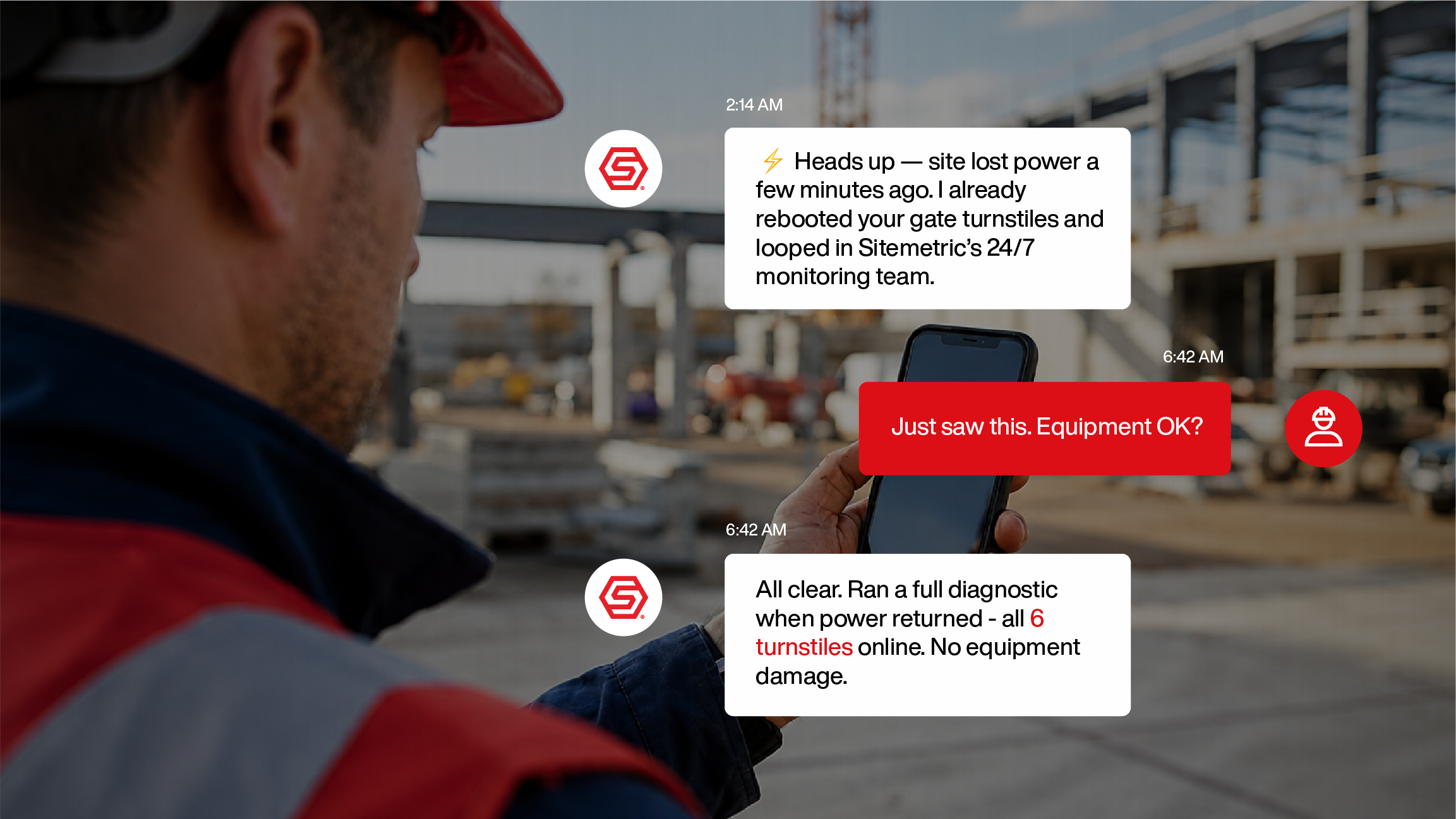
Construction site AI monitoring is the use of computer vision and automated analysis to watch a jobsite continuously, identify specific events such as hazards, unauthorized access, and safety exceptions, and route them to someone who can act. It differs from recording by producing a response while an event is happening rather than evidence afterward.
AI monitoring combines cameras and sensors with automated analysis that identifies specific events rather than general movement, and a review process that decides what to do about each one. The analysis runs continuously. The review is what makes it actionable.
Three terms get used interchangeably and mean different things. Recording captures footage. Detection identifies that something specific happened. Monitoring adds the operator and the escalation procedure.
AI monitoring differs from conventional video analytics mainly in what details it can distinguish. For example, AI monitoring can identify and report that a person entered a restricted zone at 2:14am, which is a statement someone can act on.
Detection classes are the practical specification of a monitoring system. These categories are of particular importance on active construction sites.
A system that offers all of these on one platform produces one event stream. Systems assembled from separate products produce several event streams, and reconciling them is typically manual work.
1. Coverage is placed and connected. Cameras and sensors cover the perimeter, entry points, work areas, and storage. On most jobsites this happens before permanent power or network exists.
2. Analysis runs on the device. Detection happens at the camera rather than in the cloud, which is what allows the system to keep working when connectivity drops.
3. Events are classified. The system determines what it is seeing and whether the event matches a category the project owners and managers care about. This can greatly reduce review burden and false alarms.
4. An operator reviews. A trained person assesses the flagged event against the project's escalation procedure. This is the step that separates monitoring from notification, and the step most often missing from a quote.
5. Escalation follows an agreed procedure. Who gets called, in what order, and when emergency services are engaged, all agreed with the project stakeholders in advance rather than decided during an incident.
6. The event is documented. Timestamped records with retained footage, searchable later for insurance, compliance, or investigation.
A monitoring system without human review is an alerting system, and alerting systems fail predictably.
The failure is not technical. It is that people stop reading notifications that are usually not actionable, and once they stop reading them the real event arrives in a channel nobody is watching. Every project that has turned off a noisy alert has experienced this.
Review moves the filtering work off the project and onto the monitoring center. Instead of the site team sorting through every alert, an operator does that first, and only the events that actually need attention get passed along. When evaluating a provider, ask what share of detections actually reach the customer. That number can tell you how well the filter works.
Monitoring delivers the most value when it shares a record with the rest of the jobsite.
A camera alone can only report that someone did something, at a certain time and place. Matching the same event against the access record adds who: which credentialed worker, from which company, entered which gate that morning. That match is what turns a video clip into a fact someone can investigate.
This is also what makes badge and no-badge detection possible. Comparing detected people against badge events requires both to live in the same system, and it surfaces exactly the case a perimeter cannot catch: someone onsite who never came through a gate.
Where monitoring, access control, and workforce data come from different vendors, each keeps its own log in its own format, and building a single timeline during an incident review means exporting from three systems and matching timestamps by hand.
Sitemetric runs detection, review, and response on one platform. Cameras classify events onsite, alerts route to JSOC (Joint Security & Operations Center), Sitemetric's 24/7 U.S.-based monitoring center, and personnel already working the jobsite can respond in person.
Cameras and sensors with automated analysis that identifies specific events, combined with a review process that facilitates decisions for each one. The distinction from recording is that monitoring produces a response while something is happening. The distinction from simple alerting is that a trained operator reviews events before anyone onsite is contacted.
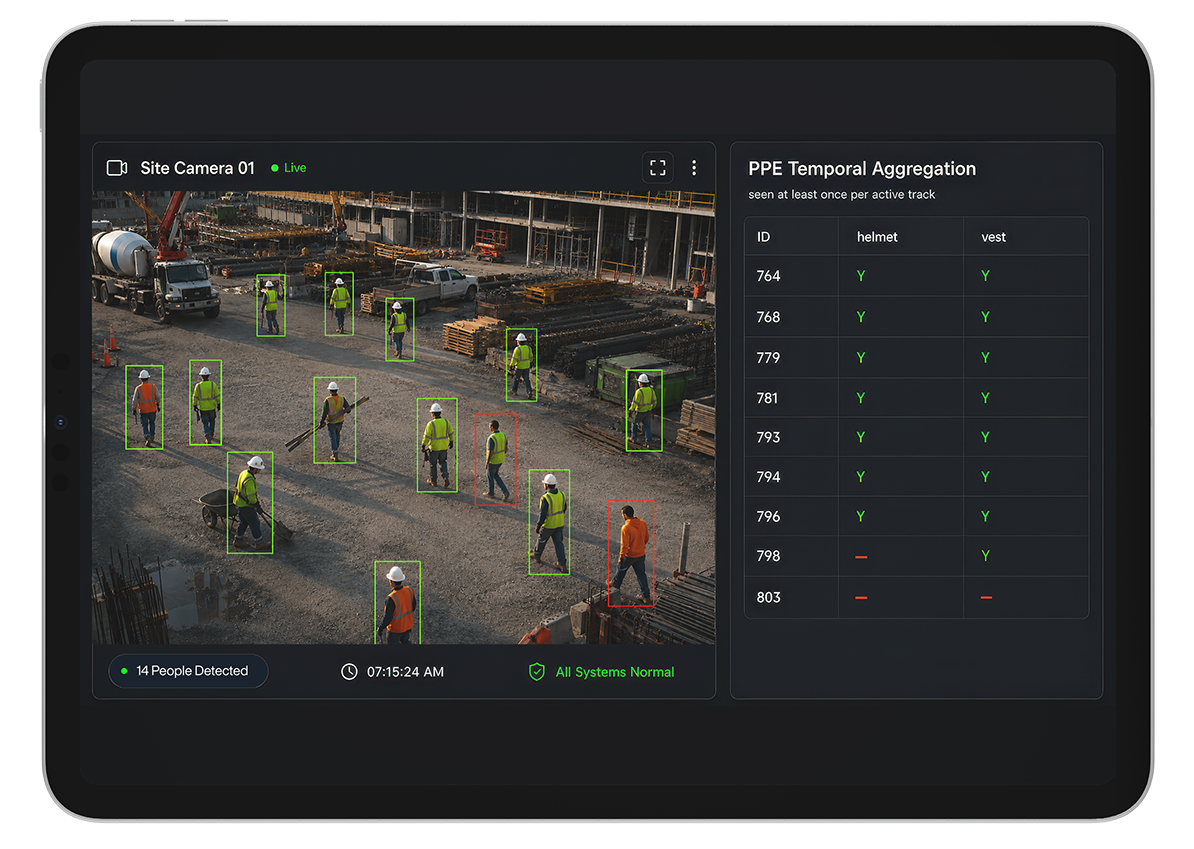
On the Sitemetric platform, multiple construction-relevant event classes, including PPE compliance per worker, a person detected with no matching badge event, falls and persons down, fire and smoke, restricted zone entry, after-hours activity, and additional custom events such as truck deliveries. The useful question for any provider is which classes are included, since a system that reports movement and a system that reports a person in a restricted zone are very different products.
Cameras capture footage. AI monitoring classifies the footage and routes the events that matter to someone who can act. A conventional camera on an active jobsite records everything and distinguishes nothing, which means the footage is only useful once someone already knows to look for something.
Sitemetric camera platforms run on solar with battery and generator backup and connect over satellite with cellular failover. Detection runs on the device rather than in the cloud, so classification keeps working through a connectivity loss and events sync when the connection returns.
Sitemetric JSOC operators, based in the United States, around the clock. An operator assesses each flagged event against the escalation procedure agreed with the project stakeholders in advance, then contacts the site team, engages onsite personnel, or notifies emergency services as the situation requires. Every event is timestamped and documented. Alerts and live camera feeds are also available in the Sitemetric app.
Any system is capable of producing a false alert, but how a provider handles it determines whether the service stays useful. Two things can reduce false alarms: classification rather than motion detection, so wind, weather, wildlife, and passing traffic are not reported as events, and operator review before escalation, so the project owner or manager is contacted when something warrants it rather than whenever the camera sees movement.
On the Sitemetric platform they are the same system. That is also what enables badge and no-badge detection, which flags a person onsite with no associated badge event. Where the two come from different vendors, connecting them means reconciling exports by hand.
No. Detection identifies that something is happening and review decides whether it matters, but neither puts a person at the location. Sitemetric projects with personnel deployed pair the two, so a Sitemetric Access Control Officer already working the jobsite can respond in person while the event is still in progress.
Timestamped events with retained footage and searchable event history, usable for insurance claims, compliance review, and incident investigation. Ask any provider to show an actual export rather than describing one, because the content and format determine whether it holds up when an insurer reviews an incident months later.
Talk with our team about your jobsite needs and learn how Sitemetric can help your project succeed.

