
Most construction sites have data. Almost none have someone who owns it. Tristan Thomas on why data needs the same accountability as every other trade on site.
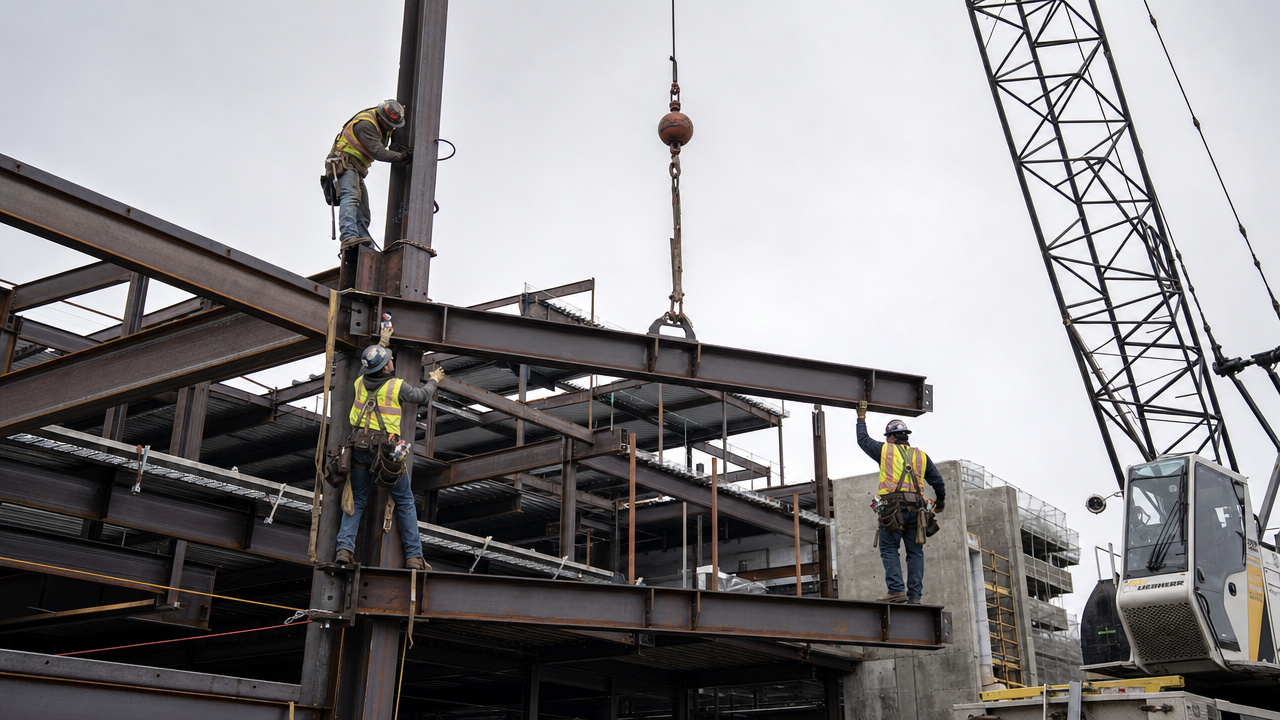
Most construction sites have data. What they don't have is someone who owns it.
That gap — between data existing and data actually working — is costing projects more than most teams realize. I've watched it play out on commercial builds, infrastructure projects, and some of the most demanding mission-critical data center construction in the country right now. Sites where the timelines are aggressive, the owners are sophisticated, and the margin for error is essentially zero.
In every case, the problem isn't access to technology. It's that data on site is fractured — spread across safety teams, access control, project managers, and subcontractors, each with their own systems, and nobody accountable for making it cohere.
Fractured data isn't just a workflow problem. It's the reason sites operate reactively when they could be operating with clarity. And closing that gap is the core of what we call Integrated Construction Intelligence.
Think about how construction treats every other trade. Electricians. Ironworkers. Carpenters. Skilled people, established process, daily accountability. You don't show up with the tools and expect the outcome to happen on its own.
Data on a construction site has exactly the same requirements. But we haven't given it an owner.
The mistake most sites make is treating the technology as the data. You can deploy sensors, cameras, and tracking systems across an entire job site and still produce nothing useful.
The craft isn't the technology. It's knowing how to use the technology to reveal the truth about what's actually happening on site.
Think about the drone programs a lot of our customers use for progress monitoring. Nobody points at the drone and calls it the data. The operator comes out, performs the work, collects the data, feeds it through software — and that's what produces the outcome. The drone is the tool. The operator is the trade.
Data is the same. But most sites don't have that equivalent. They have sensors nobody's adjusting, badges nobody's enforcing, and data fractured across five different stakeholders with no one person accountable for the whole.
When a site has no single owner of its data, it operates reactively.
Teams don't know they're falling behind until they already are. Weekend shifts get added. Crews go 24/7. The project enters catch-up mode — because the signals were there all along, but nobody was watching.
The safety story is where this gets serious.
A worker logging 14-plus hours a day for seven straight days is a walking risk. You can't see that by looking at someone. A worker exposed to high heat for hours has a risk profile no walkthrough will reveal. A worker returning after 60 days off-site is coming back to a project that may look completely different — new energized spaces, changed infrastructure, different hazards. Without a system that flags that gap and routes them back through safety orientation, they walk back on and nobody knows.
Is that worker certified for the lift they're about to operate? Is there a competent person on site for their crew? Without someone actively owning the data, those questions only get answered after something goes wrong.
And then there's the dispute problem. When a PM believes they've been shorted hours or headcount, and their only evidence is self-reported data, they have nothing to stand on. If nobody was managing the data proactively up front — adjusting sensors, enforcing compliance, auditing collection — there's nothing to pull when it matters.
When data is treated as a trade — when hardware, intelligence, and dedicated people work as one — the operation feels different. Here's what changes:
Decision-making becomes proactive. Teams catch fatigue before it becomes an incident. They catch schedule drift before it becomes a cost overrun. Certification gaps get flagged before they become liabilities.
Owner meetings get shorter. When you have a single source of verified, third-party data, you don't have to explain yourself. You show the data. The owner sees headcount, hours, progress, and compliance in one view. The conversation becomes a confirmation, not a negotiation.
Hard decisions get easier. When you need to add weekends or extend hours to hit the timeline, you have data backing the call. It's not one person's opinion. It's the record of what actually happened. That changes the room.
A lot of construction technology is built by people who have never been on a construction site. That's part of why data in this industry keeps getting framed as a software problem.
It isn't.
When a project moves from site work to vertical, the trades change. The risk areas shift. The sensors that made sense in phase one need to move. If you don't have someone who can read where a project is in its lifecycle and adjust accordingly, you end up with technology sitting in the wrong place, tracking the wrong things, and reporting back on areas that no longer matter.
Most of our customers receive a corporate mandate to make technology work on their sites. That mandate lands on one or two people who are already stretched. Data becomes another task on a long list — and it falls. On a data center build running 24/7 with multiple trade partners and hundreds of workers, that isn't an option.
Dedicated ownership isn't a nice-to-have. It's the difference between data that answers questions and data that just exists.
If you're a project manager or superintendent reading this — stop thinking about data as something you'll reach for when you're already in trouble.
Treat it up front. Enforce badge compliance from day one. Move sensors as the project moves. Audit your collection regularly. Back the system before you need the system.
Because when that data is clean, current, and verified — tied to real project history with a dedicated person behind it — it can protect you from worker comp claims, hold up in a dispute, and make you the person in the room with real answers when everyone else is working from gut feel. You're going to want it. Treat it like a trade before you need it.
Five years from now, the companies that built real data discipline will have a structural advantage. Not because data is trendy — but because AI is only as good as what you're feeding it.
If you've spent years with fractured data — self-reported inputs, sensors nobody's adjusted, collection split across an already-stretched field team — you've built a foundation no AI model can do anything useful with. Feed it bad data and you get bad decisions. Or worse: confident decisions pointed in the wrong direction.
The companies that treated data purposefully will have something different. Historic trends. Verified headcount. Certified hours. Benchmarks across project types and build scales. Their AI can tell them: for a build this size, at this phase, here's what the data says you should be doing.
Treat data like a hobby and you get hobby data.
The gap between those two companies — the ones who built the discipline and the ones who didn't — is only going to widen. The question isn't whether Integrated Construction Intelligence becomes the standard in this industry. It's whether your organization gets there first.

Talk with our team about your jobsite needs and learn how Sitemetric can help your project succeed.

