
After 25 years working his way from laborer to senior superintendent, Scott Miller moved into construction technology to help build the tools he wished he had in the field.
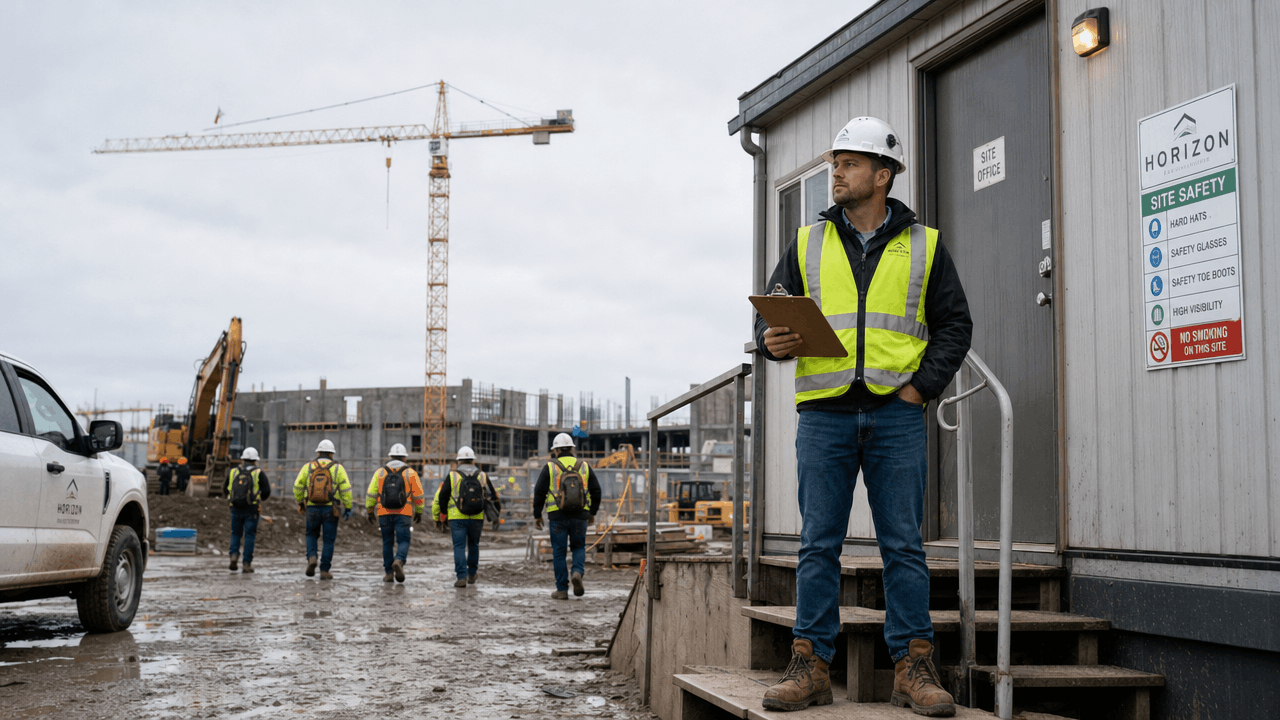
Ispent 25 years in the general contracting world. Started as a laborer andworked my way up through foreman, superintendent, and finally seniorsuperintendent. The kind of work where a hundred things can go sideways beforelunch and it's your name on the schedule.
Whenpeople hear I traded the field for a title like VP of Digital & PhysicalProducts, I usually get the raised eyebrow. Fair enough. Let me tell you how ithappened, because I wasn't looking for a career change. If anything, I wasterrified of one. I was looking for a way to solve a problem on a constructionsite, and that one problem changed the whole back half of my career.
Ispent a lot of years watching technology arrive on construction sites thatclearly wasn't built by anyone who'd ever worked one. The superintendentstanding in the trailer at 5:30am doesn't need a feature roadmap. He needssomething that solves the problem in front of him right now, holds up in thefield, and doesn't add work to an already full day.
Thatgap between what technology promises and what it actually delivers on aconstruction site is something I lived for 25 years before I decided to dosomething about it.
Themost complex job I ever ran was a DC school project that had a little ofeverything: net zero, mass timber hybrid steel, design-build, and the one Istill talk about — a floating electric room so we could keep the existingschool in operation while we built the new structure around it. That job tookits toll on a lot of us, but we got it done and occupied on time.
Whilegetting the site set up, I ran into a requirement I had to meet: I needed a wayto track which workers had completed their background checks. That search iswhat led me to Sitemetric. I met the founders on-site, walked through thesystem with them, and by the end of that one conversation I knew it was theright fit for the project.
Butthat's not the part that hooked me. The part that hooked me is what came next:I started asking for changes.
Ididn't want a product that did just one small task. I wanted one that earnedits keep by doing several. Project budgets are tight, so the more a singlesystem can do, the more value it brings.
Aftergetting Sitemetric set up on my project, I got connected with the dev team andstarted requesting changes.
Firstwas an online safety orientation and pre-registration. That meant workersshowed up ready to work instead of me sitting in the trailer for hours everymorning running orientations one group at a time. Then I asked for zonealerting. I wanted to know the second a worker went up on the roof so I couldverify their PTP and go put eyes on their tie-off systems myself. We set alertson the energized electric rooms. And the first real test of the whole conceptwas alerting me if a badged worker walked into an occupied area of the schoolwhere they didn't belong.
Everyone of those requests came from a problem I was living, not a feature on aroadmap. I'd spent two decades watchingconstruction technology get dreamed up by people who'd never poured a footingor signed fifty guys in before sunrise. This was the opposite. This wastechnology being shaped by the field, in real time, on a real job.
Afterthat project, the math got simple. I could keep being one superintendentsolving problems on one construction site at a time, or I could help build thetools that solve them for every superintendent and worker on every constructionsite. After 25 years, that's the work that pulls me now.
Here'sthe way I think about my role: I'm not a software guy who learned a littleabout construction. I'm a construction guy who learned the software. When ourteam is weighing a feature, I'm the one who can tell them what it's actuallylike in the field — what a super needs, what just gets in the way, and what'llget ignored the first time it slows the crew down. That perspective is thewhole reason I'm here, and it's the lens I bring to everything we build.
Whatwe do at Sitemetric is Integrated Construction Intelligence, and integrated isthe word that matters. It's not a camera system or an access control platform.It's all of it working together, connected, so it holds up in the field and notjust in a demo.
Therequests I was making on that DC school project — zone alerting on energizedrooms, real-time access verification, instant notification when someone wassomewhere they didn't belong — those weren't just feature requests. They werethe beginning of a system that needed to work around the clock, becauseconstruction sites don't stop.
That'sespecially true on mission-critical builds. Data center projects running 24/7with aggressive timelines, sophisticated owners, and no margin for error need asystem that matches their operating tempo.
WhenI was a superintendent asking for alerts on energized rooms, I didn't havelanguage for what I was describing. Now I do. It's what happens when the righttechnology, the right data, and the right people operate as one system.
Thetools have changed a lot in 25 years. What hasn't changed is what the job isreally about: getting the work done, and getting every person on thatconstruction site home safe at the end of the day.
Thesuperintendents, foremen, and workers who've stood in the trailer know thingsthat don't show up in a product spec. They know what slows a crew down. Theyknow what gets ignored when the schedule tightens. They know what a realproblem looks like versus what just looks like one on a dashboard.
Thatknowledge belongs in the technology. It's the difference between tools peopleactually use and tools that collect dust after the demo.
Theconstruction industry has always been built by people who solve problems inreal conditions, under real pressure, with real consequences. The technologythat serves it should be no different.

Talk with our team about your jobsite needs and learn how Sitemetric can help your project succeed.

