
Construction may have entered the connected-technology era later than other industries, but AIoT gives it an opportunity to lead the next phase. Michael Ueland explains why the industry is reaching a major inflection point.
I've been in connected device technology long enough to remember when the price of cellular data was $10 per megabit. Today that same megabit runs in the pennies. What happened in between is the story I want to tell: the full arc of how IoT went from expensive lighthouse experiments to the intelligence layer powering the most complex job sites in the world. I had a front-row seat to all of it, starting back when the technology didn't even have a name.
That history matters more than ever right now. Construction is at an inflection point, and the only way to understand how significant that is, and what's actually at stake, is to understand where we've been.
IoT didn't arrive fully formed. It got here in stages.
Phase 1 was the era of lighthouse projects. High costs, custom-built everything, limited scale. But the early proof points were real. One of the early projects I worked on was with Progressive Insurance. They wanted a way to better segment their drivers, rewarding safe driving behavior with discounts. So they partnered with Xirgo Technologies to develop an OBD II device that plugged into a vehicle and tracked acceleration and deceleration. Safe drivers received meaningful discounts on their premiums.
What happened next was a case study in what connected data can do to a market. Safe drivers left State Farm and came to Progressive. Market share moved from number 6 in the country to number 3. One IoT program. Measurable, structural competitive advantage.
Phase 2 was about scale. Network operators, Verizon, AT&T, Vodafone, locked into the IoT opportunity and drove connectivity costs down dramatically. Platforms standardized. You didn't have to build everything yourself anymore. And telematics became the flagship market: companies like Samsara built entire categories almost from scratch.
Phase 3 is where we are now. And it's the most important one yet, because Phase 3 is IoT with AI, what a lot of people are starting to call AIoT.
"IoT was always meant for AI.”
AI is fundamentally an analytics engine. It needs data to analyze, patterns to learn from, and real-world inputs to generate predictions that actually mean something. IoT is what puts that data into the world in the first place. The two were made for each other.
Here's the thing about construction: the industry largely missed Phase 1 and Phase 2. The lighthouse projects of early IoT happened in insurance, logistics, manufacturing. Telematics scaled in fleet management. Construction sat on the sidelines, not by choice, but because the technology wasn't ready for the environment.
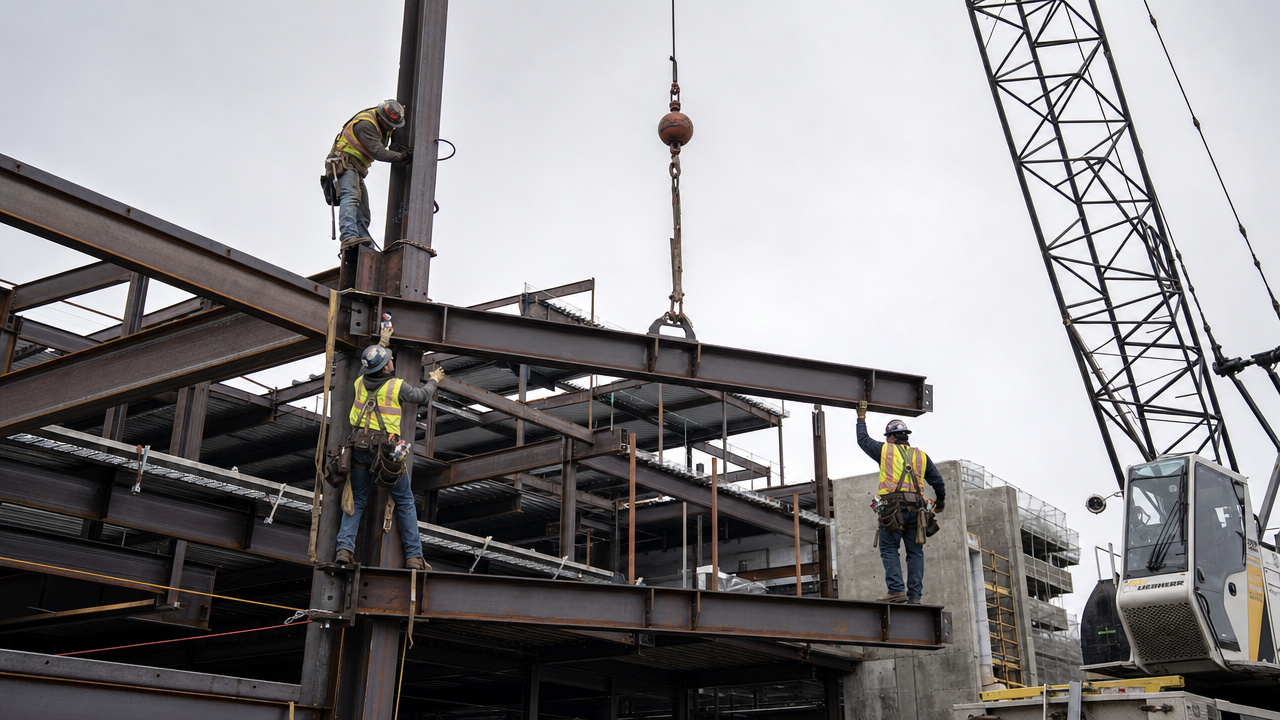
Construction sites are among the most complex physical environments in the world. They're constantly evolving. The number of workers on site changes daily. The location of activity shifts as the project moves through phases, from site work to vertical, vertical to fit-out, each stage with different trades, different risks, different data requirements. There's often no power infrastructure and no reliable cellular coverage. The tools that worked for Phase 1 and Phase 2 weren't built for any of that.
Construction is now entering Phase 3 without the baggage of the earlier phases, landing directly in the era of AIoT at exactly the moment when the technology is finally fit for the environment. At Sitemetric, we've spent years building toward this moment. Our architecture was designed specifically for construction sites: the sensors, the cameras, the zones, the connectivity. The result is a dataset built at real construction scale: over 6 billion data points collected across active construction sites. That's the foundation AI actually needs to do something meaningful.
"Construction didn't lead the first two phases of IoT. But Phase 3 is one the industry is entering at exactly the right moment, with exactly the right technology, and the opportunity to define what the intelligent job site looks like for decades to come."
I've watched this pattern play out more than once. When technology shifts, market share shifts. It's almost mechanical.
Before the digital era in mobile, the dominant players were Nokia, Ericsson, and Motorola. Those names are largely gone from the handset market today. Samsung and Apple didn't just build better phones, they identified the shift to digital and moved decisively. The companies that didn't see it coming, or saw it and didn't act, got left behind.
"Anytime there's a shift in technology, there's a shift in market share."
AIoT in construction is that kind of shift. And the general contractors and owners who recognize it early, who invest now in building a connected, intelligent job site, are the ones who are going to find themselves in a structurally different position than their competitors five years from now.
What does that position look like? Lower costs. Safer sites. More projects delivered on time and under budget. The ability to assess risk in real time rather than relying on periodic site visits from insurance representatives. Data that gives you real answers when there's a dispute, an incident, or a workers' comp claim. Owner meetings where you're showing the data instead of explaining the delay.
These aren't theoretical outcomes. They're what happens when the data is there, it's clean, and someone is acting on it.
On a mission-critical data center build running 24/7 with aggressive timelines and owners watching every milestone, real-time data changes what's possible. When you're tracking headcount, trade activity, hours logged, and zone-by-zone progress across an active site, you can start to model what the rest of that project looks like: where it's ahead, where it's at risk, what needs to move before a delay becomes a problem.
That's the kind of insight owners are increasingly expecting from their GC partners, and the kind that can only come from a platform collecting data at real construction scale. Sitemetric has processed over 6 billion data points across active sites. That's what gives the AI something worth working with.
The safety dimension is just as concrete. When a worker has a heat-related incident on site, the data tells you exactly where that worker was, how long they were in that area, and what conditions they were exposed to. That information changes the decision before the next incident happens: more water breaks, better positioning of cooling stations, adjustments grounded in what actually occurred rather than what someone assumed.
AIoT is not something a construction team builds for themselves. The hardware, connectivity, software, and AI layers are all moving simultaneously. Staying current across all of them, while keeping a solution running reliably on a dynamic construction site, requires a partner deeply specialized in the environment and operating at real scale.
Sitemetric brings both. This is all we do. A single data center site in our network can run four booths, eight connected turnstiles, thirty sensors, six scanners, ten routers, ten cameras, and over a thousand active badges, all integrated in one platform, across live sites, right now. We've built specifically for construction, we understand the conditions that knock other platforms offline, and we operate at real scale across live sites today.
When our customers plug into Integrated Construction Intelligence, they're getting connected equipment, real-time data and insights, and expert people on the ground who know how to make it work in the real world.
Looking ahead, I think the separation between companies that embrace AIoT and those that don't is going to be significant, and it's going to compound over time.
The leaders who move now are going to build data assets that their competitors simply won't have. Historic trends. Verified workforce data. Benchmarks across project types. As AI models get more sophisticated, those companies will be able to generate increasingly precise predictive intelligence: knowing what a project of a certain type, at a certain phase, should look like, and catching deviations before they become problems.
Longer term, I think we're going to see construction sites look very different. More automation. Robotics. AR and VR integrated into how work is managed and inspected. A new kind of role, what I'd call the AI construction engineer, who is orchestrating work rather than performing it directly. The job site won't disappear. But the way it's managed is going to change fundamentally.
The companies that are building the data foundation now are the ones who will be positioned to take advantage of everything that comes next.
Construction didn't lead the first two phases of IoT. But Phase 3, the AIoT era, is one the industry is entering at exactly the right moment, with exactly the right technology, and the opportunity to define what the intelligent job site looks like for decades to come.
And at Sitemetric, it's exactly what we're building toward.

Talk with our team about your jobsite needs and learn how Sitemetric can help your project succeed.

